· Informational · 9 min read
Video Marketing Statistics 2026: Trends, ROI, Usage & Consumer Insights
Explore the latest video marketing statistics for 2026, covering ROI, short-form video, AI adoption, automation, and consumer trends.

Video is everywhere. From the short reel you watch while scrolling through Instagram to the product demo that helps you decide what to buy, videos have become a part of how we discover, learn, and connect with brands.
What makes video so powerful? It feels personal. A well-made video can explain an idea, show how a product works, tell a story, or simply grab your attention in a way that a block of text sometimes can’t.
That’s why businesses of all sizes, from small brands to global companies, are investing more time and effort into creating videos that people actually want to watch.
But video marketing isn’t just about views and likes anymore. Marketers are looking at everything from short-form content and social media engagement to AI-powered video creation, budgets, conversions, and ROI.
So, what do the numbers really tell us about video marketing in 2026?
We’ve pulled together the key statistics, trends, and insights to help you understand where video marketing stands today and where it could be heading next. Let’s get into it.
Video Marketing Adoption Statistics
How many businesses use video marketing in 2026?
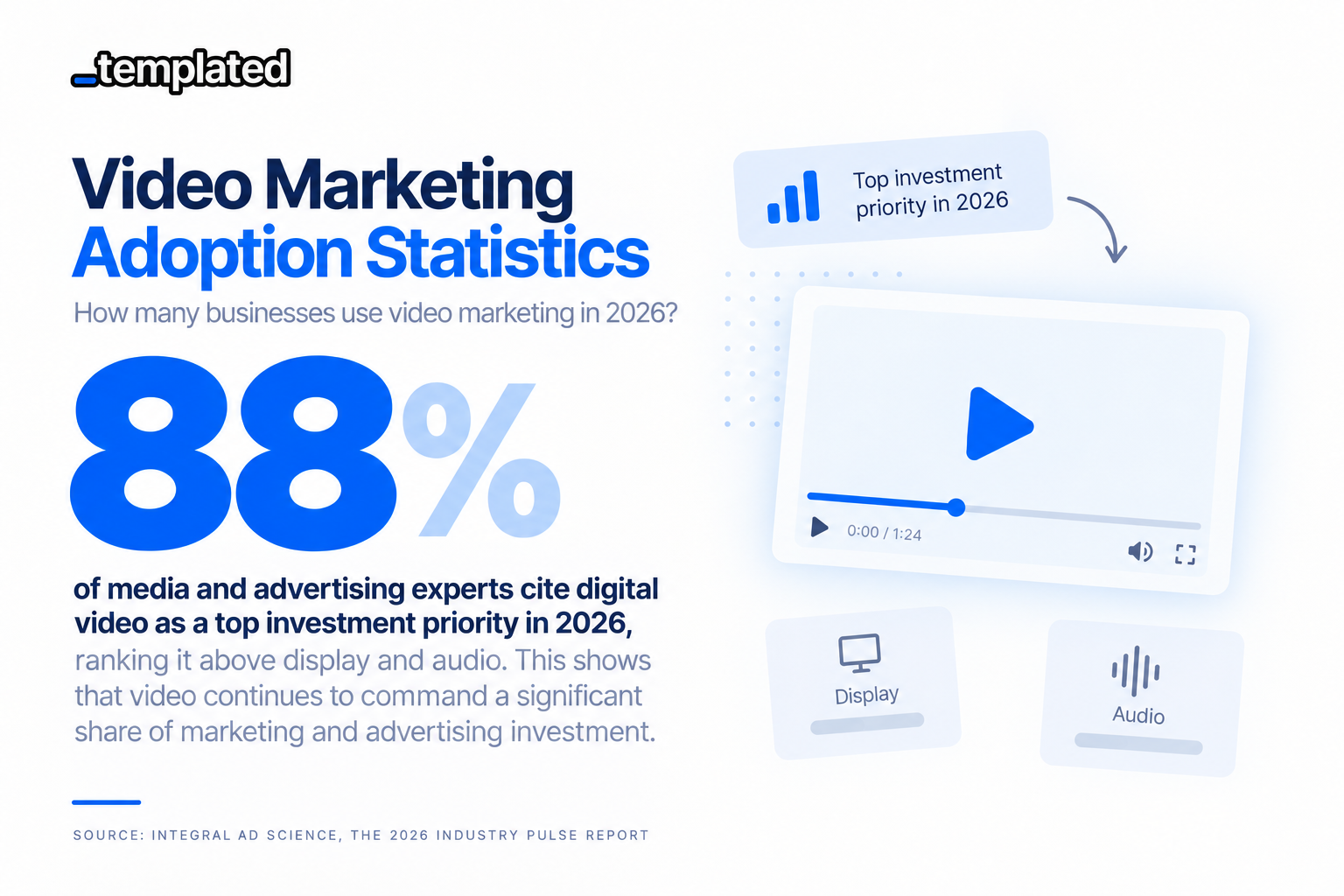
88% of media and advertising experts cite digital video as a top investment priority in 2026, ranking it above display and audio. This shows that video continues to command a significant share of marketing and advertising investment.
Source: Integral Ad Science, The 2026 Industry Pulse Report
Video Marketing ROI Statistics
Is video actually worth producing?
Video earns its place in a marketing strategy when it does more than collect views. The stronger case is what happens after someone watches more traffic, longer visits, better product understanding, more leads, and ultimately more sales.
But ROI is not only measured in direct sales. Video contributes at different stages of the customer journey
Video marketing is showing a strong impact on business results in 2026 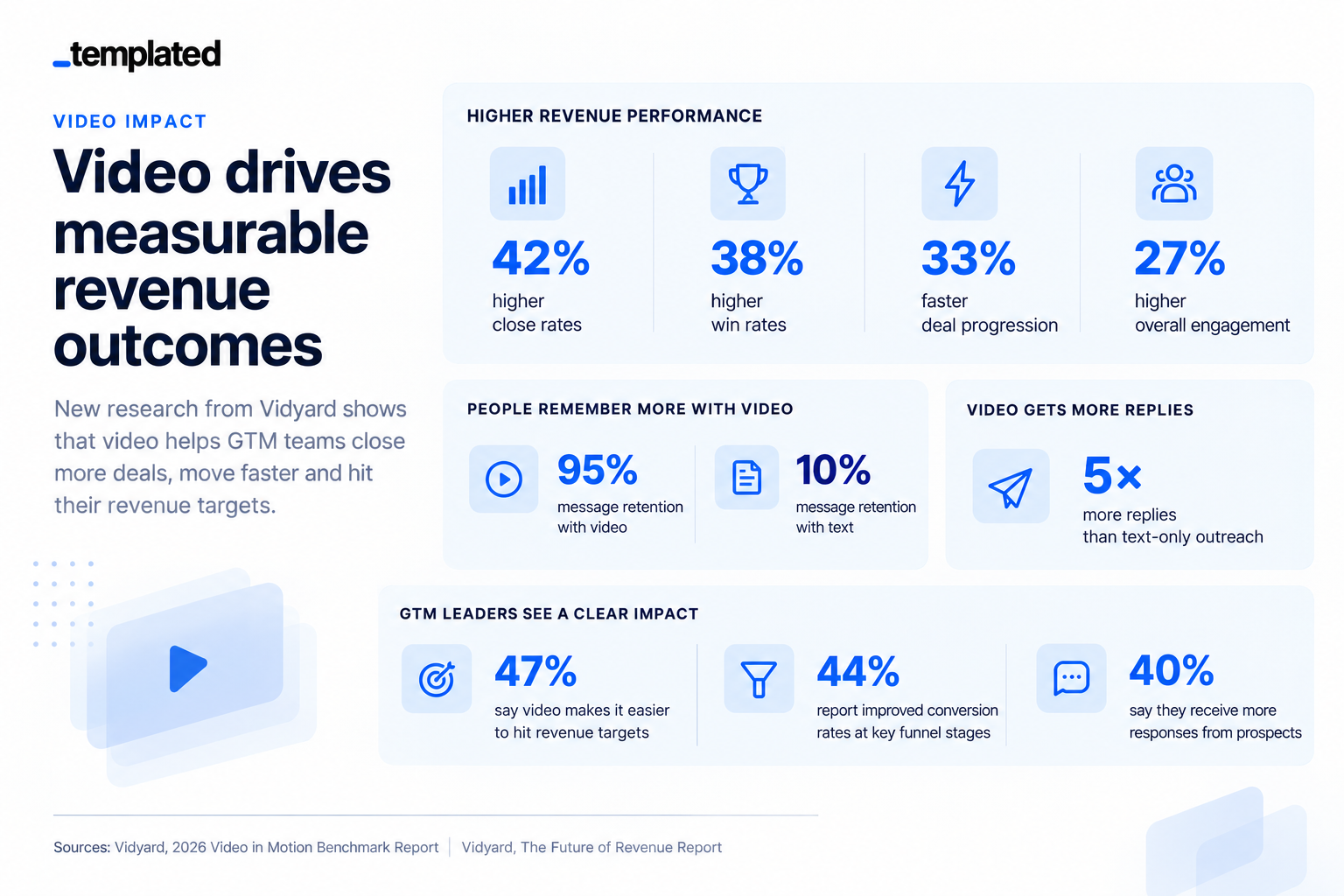
Video can influence measurable revenue outcomes, not just views and engagement. According to Vidyard's 2026 Video in Motion Benchmark Report, Vidyard customers using video across their go-to-market motion saw 42% higher close rates, 38% higher win rates, 33% faster deal progression, and 27% higher overall engagement.
The report also found that people retain 95% of a message delivered via video, compared with 10% from text, while video-first cold outreach generates 5× more replies than text-only outreach.
Among GTM leaders who measure video's revenue impact, 47% say video makes it easier to hit revenue targets, 44% report improved conversion rates at key funnel stages, and 40% say they receive more responses from prospects.
Sources: Vidyard, 2026 Video in Motion Benchmark Report | Vidyard, The Future of Revenue Report
Consumer Video Consumption Statistics 2026
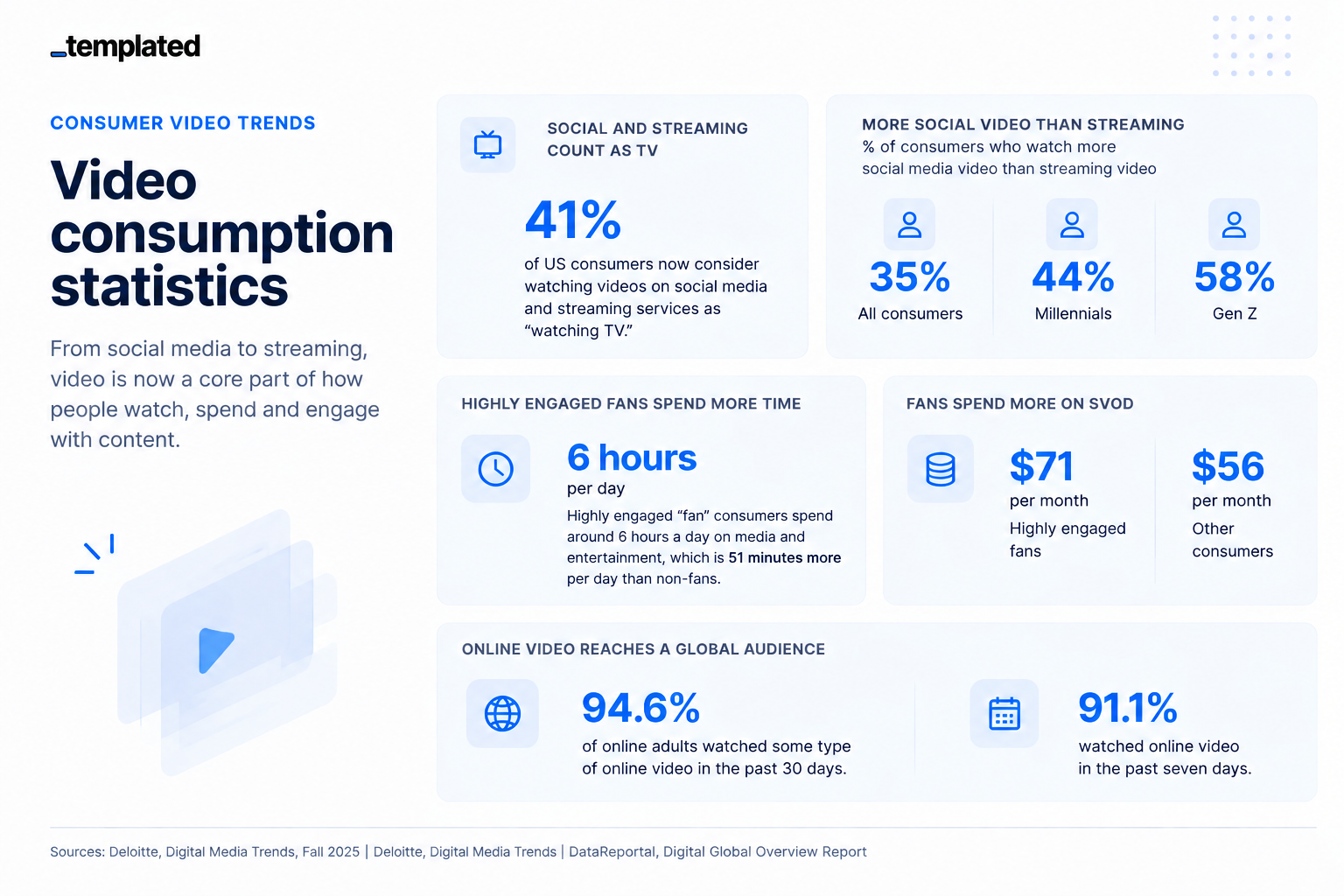
- Video consumption is no longer limited to traditional television. 41% of US consumers now consider watching videos on social media and streaming services as “watching TV,” showing how fragmented the modern viewing experience has become.
- Social video is particularly important for younger audiences. 35% of consumers watch more social media video than streaming video, rising to 44% among millennials and 58% among Gen Z.
- Highly engaged “fan” consumers spend around 6 hours a day on media and entertainment, which is 51 minutes more per day than non-fans. They also spend an average of $71 per month on SVOD services, compared with $56 among other consumers.
- Globally, online video consumption is also widespread. 94.6% of online adults watched some type of online video in the past 30 days, while 91.1% watched online video in the past seven days.
Sources: Deloitte, Digital Media Trends, Fall 2025 | Deloitte, 2026 Digital Media Trends | DataReportal, Digital 2026 Global Overview Report
Short-Form Video Marketing Statistics 2026
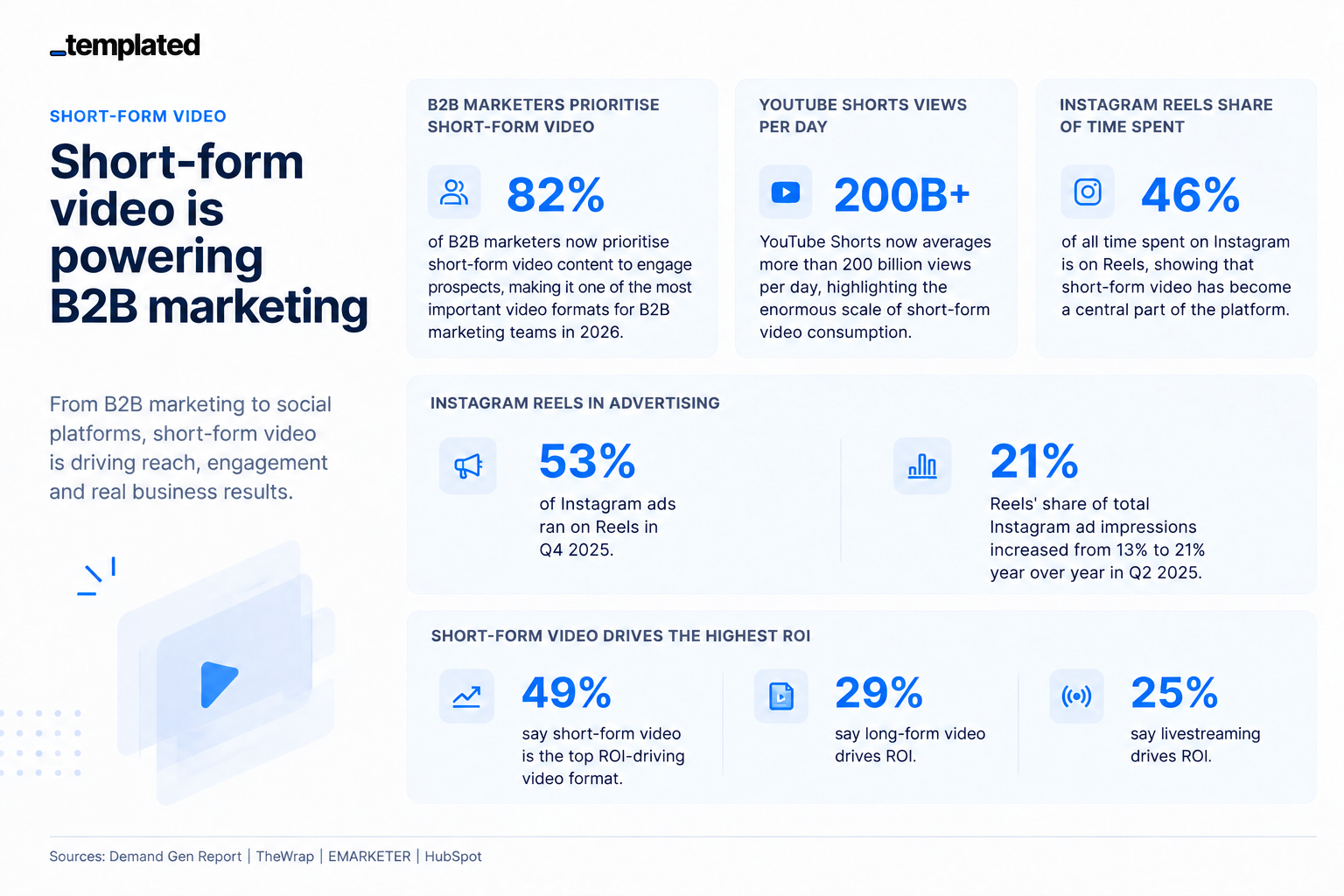
- 82% of B2B marketers now prioritise short-form video content to engage prospects, making it one of the most important video formats for B2B marketing teams in 2026.
- YouTube Shorts now averages more than 200 billion views per day, highlighting the enormous scale of short-form video consumption.
- Instagram Reels accounts for 46% of all time spent on Instagram in US, showing that short-form video has become a central part of the platform.
- 53% of Instagram ads ran on Reels in Q4 2025, while Reels' share of total Instagram ad impressions increased from 13% to 21% year over year in Q2 2025.
- Short-form video is the top ROI-driving video format at 49%, compared with 29% for long-form video and 25% for livestreaming.
Sources: Demand Gen Report | TheWrap | EMARKETER | HubSpot
How Many Brands Are Using AI for Video Creation?
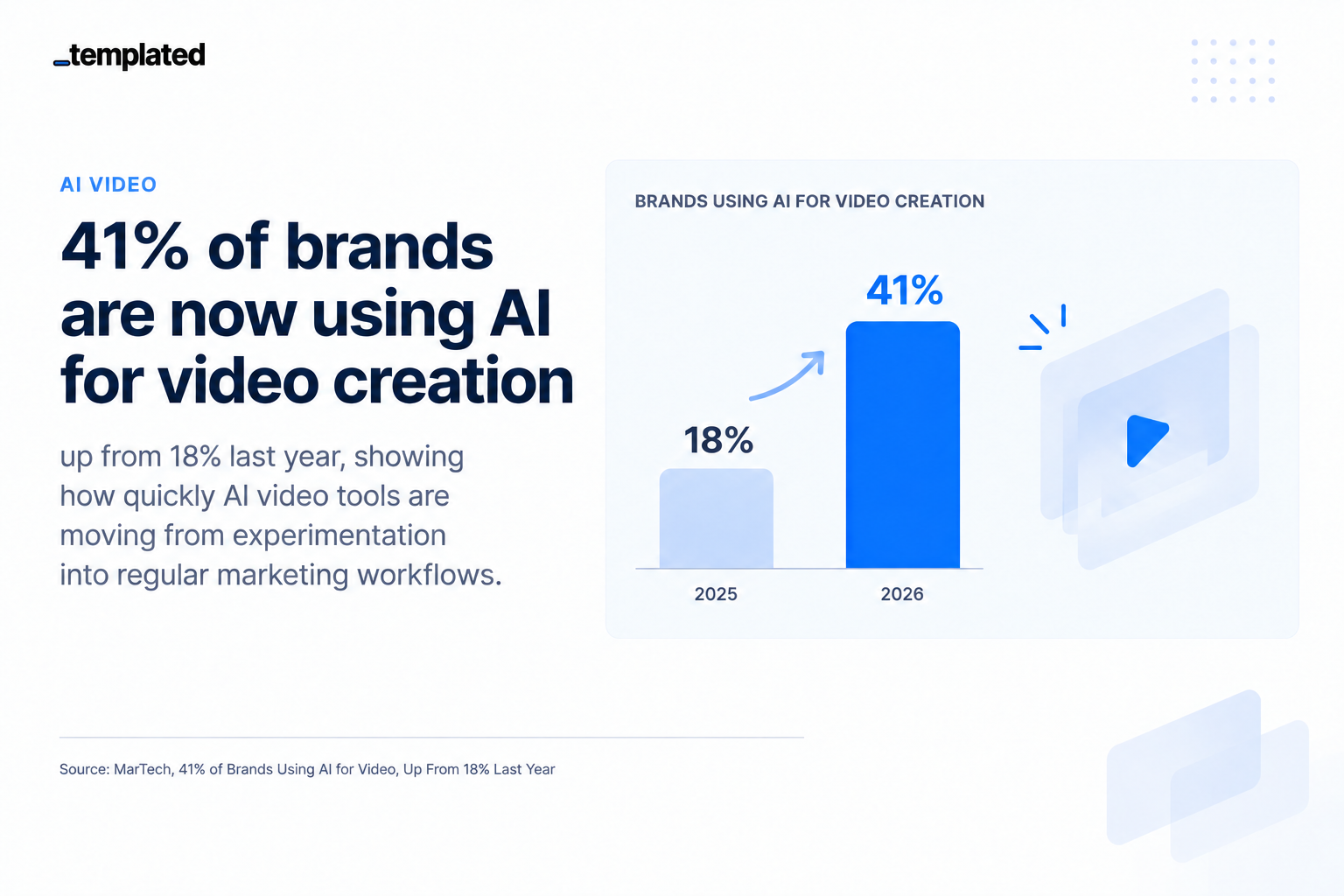
41% of brands are now using AI for video creation, up from 18% last year, showing how quickly AI video tools are moving from experimentation into regular marketing workflows.
Source: MarTech, 41% of Brands Using AI for Video, Up From 18% Last Year
Video Automation Statistics
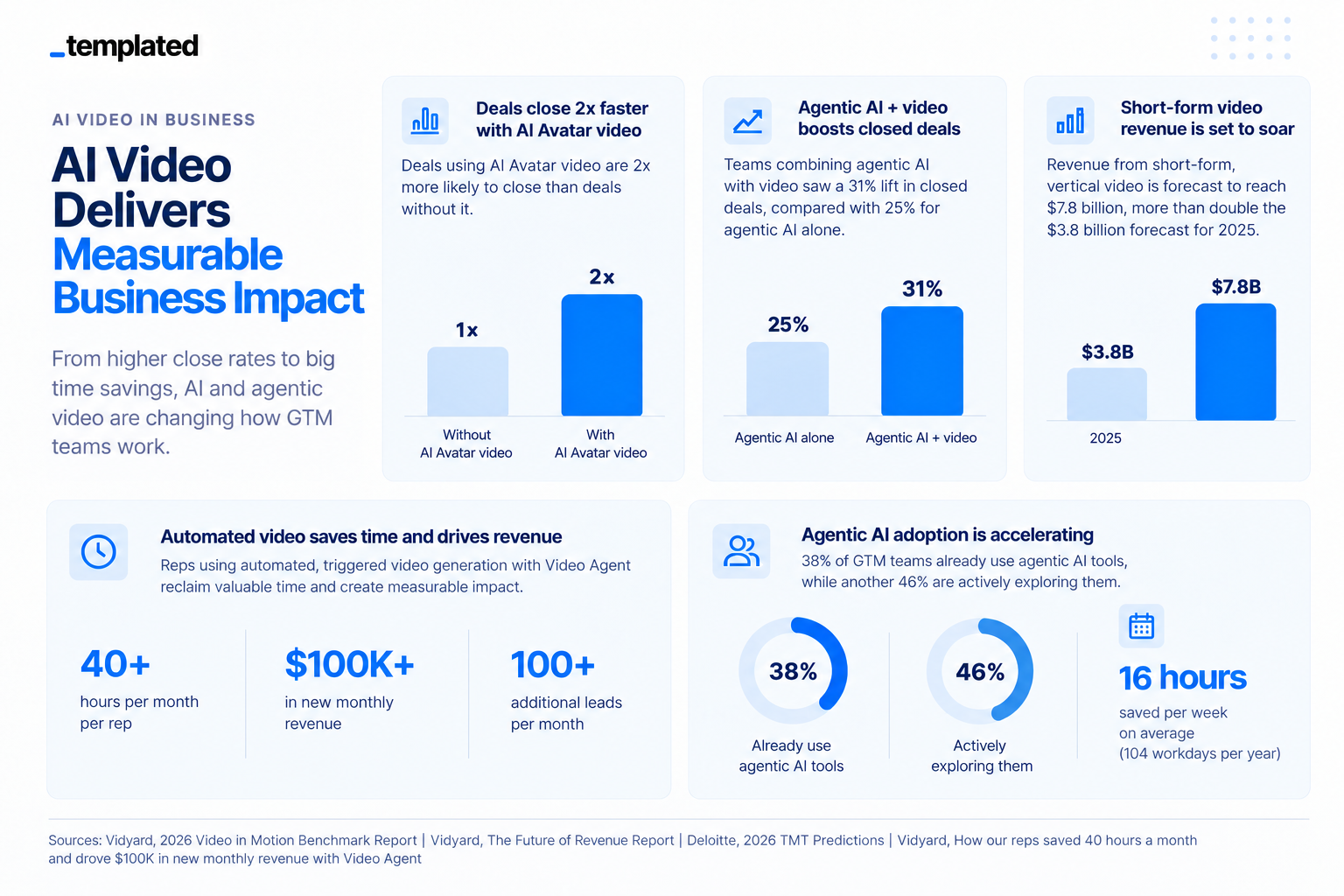
- Teams combining agentic AI with video saw a 31% lift in closed deals, compared with 25% for agentic AI alone.
- Reps using automated, triggered video generation with Video Agent reclaim 40+ hours per month per rep, with the workflow attributed to $100K+ in new monthly revenue and 100+ additional leads per month.
- 38% of GTM teams already use agentic AI tools, while another 46% are actively exploring them. Adopters save an average of 16 hours per week, or about 104 workdays per year.
- Revenue from short-form, vertical video is forecast to reach $7.8 billion in 2026, more than double the $3.8 billion forecast for 2025.
Sources: Vidyard, 2026 Video in Motion Benchmark Report | Vidyard, The Future of Revenue Report | Deloitte, 2026 TMT Predictions |Vidyard, How our reps saved 40 hours a month and drove $100K in new monthly revenue with Video Agent
Video Marketing by Industry
Video performs differently across industries, but the 2026 ON24 benchmarks show strong engagement with webinar-based video content across several sectors: 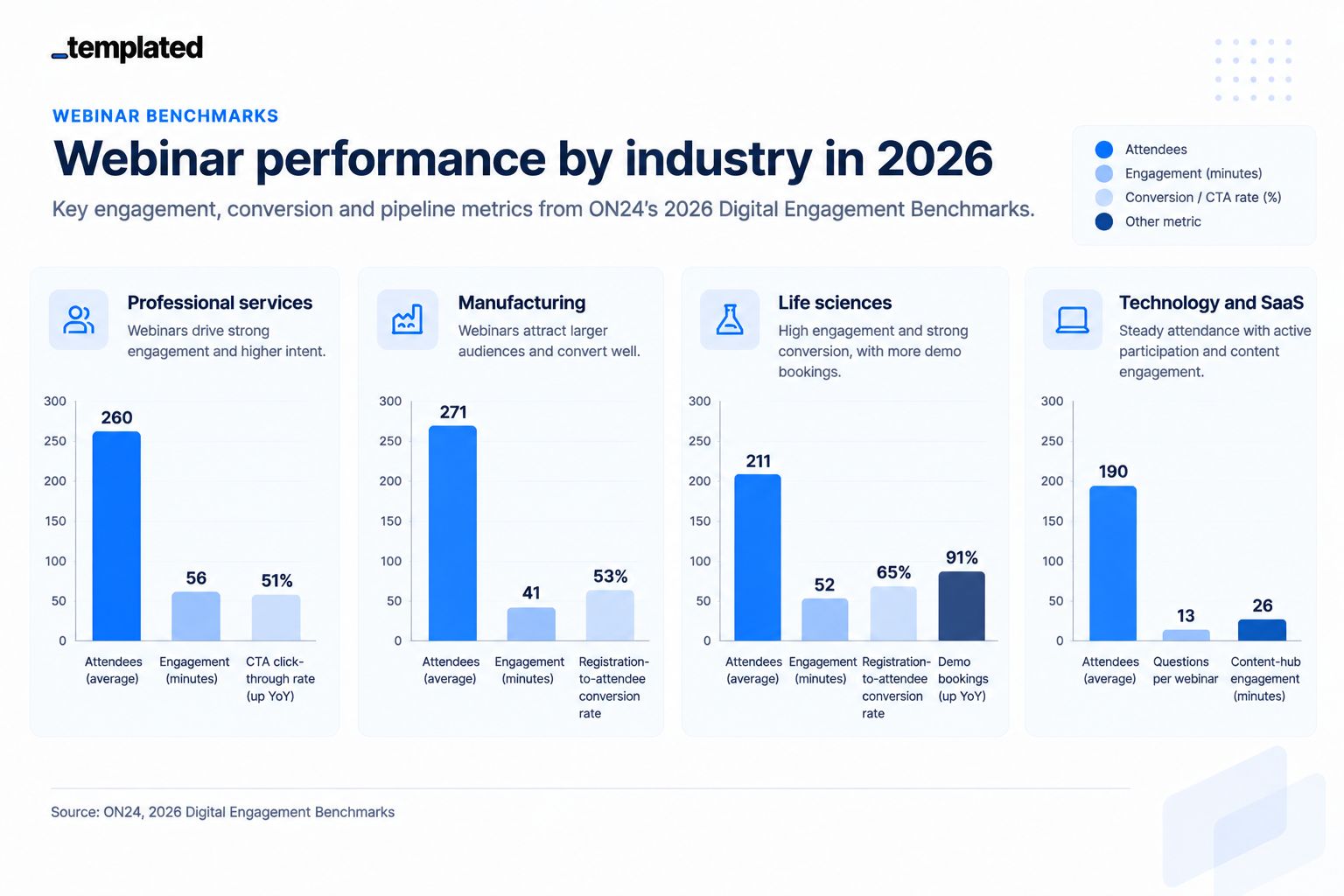
- Professional services: Webinars average 260 attendees and 56 minutes of engagement, with CTA click-through rates up 51% year over year.
- Manufacturing: Webinars average 271 attendees, 41 minutes of engagement, and a 53% registration to attendee conversion rate.
- Life sciences: Webinars average 211 attendees, 52 minutes of engagement, and a 65% registration to attendee conversion rate. Demo bookings per webinar are also up 91%.
- Technology and SaaS: Webinars average 190 attendees, with 13 questions asked per webinar and 26 minutes of content hub engagement.
Source: ON24, 2026 Digital Engagement Benchmarks
Video Marketing Content Types
What Types of Video Content Are Marketers Creating in 2026?
82% of B2B marketers now prioritise short-form video content to engage prospects, making short-form video a key format for B2B marketing in 2026.
Webinars average 239 attendees, 49 minutes of engagement, and a 60% registration to attendee conversion rate, according to ON24's 2026 Digital Engagement Benchmarks.
Sources: Demand Gen Report | ON24
Video Marketing Trends to Watch in 2026 & Beyond
Video marketing is moving toward higher content volumes. Brands are creating more videos across social platforms, campaigns, and customer touchpoints, which is changing how teams approach production.
The challenge is no longer only creating a good video. Teams now need to produce more versions of the same content for different audiences, platforms, products, and campaigns without increasing manual work at the same pace.
This shift is pushing AI and automation closer together. AI can help with creative tasks such as generating scripts, visuals, and ideas, while automation helps turn those inputs into finished videos that can be produced repeatedly.
Short-Form Video Will Increase the Demand for More Video Variations
Short-form video continues to drive content demand across platforms like TikTok, Instagram Reels, and YouTube Shorts.
For brands, this means one campaign often requires multiple versions of the same video.
Creating each version manually becomes difficult when content needs to be updated frequently.
This is why more teams are moving toward automated workflows that can create multiple video variations without rebuilding every asset from the beginning.
AI Will Create More Content, but Automation Will Handle Production
AI is making parts of video creation faster, and the growth of tools like Canva shows how quickly teams are adopting AI-assisted design (see our Canva Statistics & Trends roundup). Marketers can use AI tools to generate scripts, concepts, images, voiceovers, and other creative elements.
The next challenge is turning those outputs into finished videos that match brand guidelines and work across different channels.
Automation fills that gap by connecting templates, data sources, and video generation systems. Instead of editing every version manually, teams can create repeatable workflows that produce new videos when content changes.
Video Creation Will Become More Connected With Existing Marketing Systems
Video production is increasingly becoming part of a connected software workflow.
Businesses can integrate product databases, CMS platforms, CRM systems, ecommerce tools, and internal applications with video automation platforms to generate and update video content automatically.
Changes to product information can trigger updated product videos, while marketing teams can use existing campaign data to generate multiple video variations. This reduces the need to manually edit individual videos whenever product details, offers, messaging, or campaign inputs change. .
How Templated Video Automation API Helps Businesses Create Videos Faster
As video production becomes more automated, businesses need a way to connect changing data with consistent video designs.
Templated offers an Image, PDF, and Video Automation API that allows teams to generate videos using reusable templates and dynamic content. A template can be created once, then connected with different data sources to produce new video versions automatically.
A typical workflow looks like:
Data Source → Video Template → API Render → Finished Video Templates keep important visual elements consistent, including branding, layouts, typography, and animations. The API handles the process of applying new content and generating updated videos. For teams creating product videos, social media content, advertisements, or personalized campaigns, this makes it easier to produce more variations without repeating the same manual editing work.
You can sign up to test this API with 50 free credits to try automated video generation workflows.
If you are not about where to get started, you can find resources on the website in the blog section, and also you can check out YouTube videos on the templated channel.
Sources & References
All statistics in this article are based on the original reports, surveys, platform data, and research listed below. Click any source to review the original data.
- Integral Ad Science - The 2026 Industry Pulse Report
- Vidyard - 2026 Video in Motion Benchmark Report
- Vidyard - The Future of Revenue Report
- Vidyard, How our reps saved 40 hours a month and drove $100K in new monthly revenue with Video Agent
- Deloitte - Digital Media Trends, Fall 2025: ‘TV’ Today Can Be Described as Anything on a Screen
- Deloitte - 2026 Digital Media Trends: Capturing Always-On Fandom Between Releases and Seasons
- DataReportal - Digital 2026 Global Overview Report
- Demand Gen Report - How to Adapt Your Content for the Modern B2B Buyer
- TheWrap - YouTube Shorts Now Averages 200 Billion Daily Views
- EMARKETER - FAQ on Short-Form Video Advertising: New Formats, Measurement Standards, and Creative Guidelines
- HubSpot - State of Marketing Report 2026 (Marketing Statistics)
- MarTech - 41% of Brands Using AI for Video, Up From 18% Last Year
- Deloitte - 2026 Technology, Media & Telecommunications Predictions
- ON24 - 2026 Digital Engagement Benchmarks Report
Automate your content with Templated